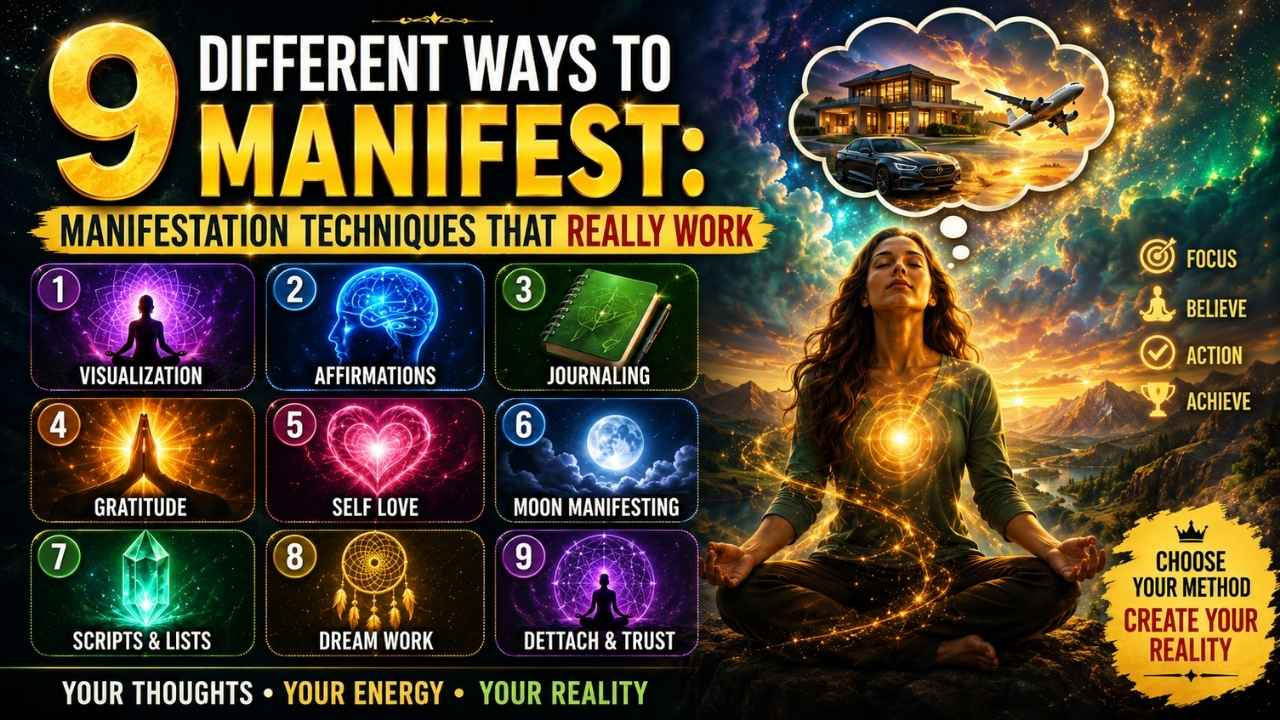
Spiritual Manifestation Techniques: In recent years, the idea of manifestation has gained widespread attention. People from different backgrounds have become interested in understanding how thoughts, beliefs, emotions, and actions influence their experiences. While manifestation is often associated with attracting success, abundance, or personal goals, its deeper purpose goes beyond material outcomes. Spiritual manifestation focuses on inner growth, self awareness, alignment, and conscious living.
At its core, spiritual manifestation is about creating harmony between your thoughts, emotions, intentions, and actions. It is not about wishing for something and waiting for it to appear. Instead, it involves developing a mindset that supports positive transformation while taking meaningful steps toward desired outcomes.

Many people begin their manifestation journey because they seek change. Some want better relationships, others desire financial stability, and many hope to experience greater peace and fulfillment. Spiritual manifestation offers a framework for exploring these desires while maintaining a deeper connection with oneself.
The process encourages individuals to become more aware of their inner world. Thoughts, beliefs, habits, and emotional patterns all play a role in shaping daily experiences. By understanding these influences, people can make intentional choices that support personal growth and positive development.

Spiritual manifestation is not tied to any single religion or belief system. Rather, it is a practice of mindfulness, intention, and alignment that can be adapted to various spiritual perspectives. The goal is to cultivate clarity, purpose, and a deeper sense of connection with life.
Understanding the Power of Intention
Every meaningful change begins with intention. Before any action is taken, there is usually a thought, desire, or vision that inspires movement toward a goal. Intention serves as the foundation of manifestation because it provides direction and focus.

When people move through life without clear intentions, they often feel distracted or uncertain. Their energy becomes scattered across multiple priorities, making progress more difficult. In contrast, setting a clear intention helps create a sense of purpose and alignment.
An intention differs from a simple wish. A wish may be passive, while an intention carries commitment and conscious awareness. It reflects a genuine desire to participate actively in creating change.

For example, someone who wants greater peace in their life may set an intention to practice patience, gratitude, and mindfulness each day. This intention influences thoughts, behaviors, and decisions, gradually creating an environment that supports emotional well being.
Intentions become more powerful when they are specific and meaningful. Rather than focusing solely on external outcomes, effective intentions often emphasize personal qualities and experiences. This approach encourages growth from within while supporting positive changes in the outer world.
Developing a daily intention practice can be a valuable step in the manifestation journey. Even a few moments of reflection each morning can help establish focus and create a positive mindset for the day ahead.
The Role of Self Awareness in Manifestation
Self awareness is one of the most important aspects of spiritual manifestation. Without understanding our thoughts, beliefs, and emotional patterns, it becomes difficult to create meaningful change.

Many people carry unconscious beliefs that influence their decisions and experiences. Some beliefs may support growth, while others create limitations. These beliefs often develop through life experiences, cultural influences, family dynamics, and personal interpretations of events.
Manifestation requires individuals to examine these internal patterns honestly. This process is not always comfortable, but it can be incredibly transformative. Recognizing limiting beliefs creates an opportunity to replace them with healthier perspectives.

Self awareness also helps people identify emotional triggers and recurring behaviors. When individuals understand why they react in certain ways, they gain greater control over their responses. This increased awareness supports personal growth and emotional resilience.
Journaling can be an effective tool for developing self awareness. Writing about thoughts, feelings, goals, and experiences allows individuals to observe patterns that might otherwise go unnoticed. Over time, these insights can lead to meaningful shifts in mindset and behavior.

The more self aware a person becomes, the easier it is to align thoughts, emotions, and actions with desired outcomes. This alignment is a key element of successful manifestation.
Cultivating a Positive Mindset
A positive mindset does not mean ignoring challenges or pretending that difficulties do not exist. Instead, it involves choosing constructive perspectives that support growth and resilience.

Life inevitably includes obstacles, setbacks, and unexpected changes. How individuals interpret these experiences often determines their ability to move forward. A positive mindset encourages learning, adaptability, and optimism even during difficult times.
Manifestation practices frequently emphasize the importance of focusing on possibilities rather than limitations. This shift in perspective can influence motivation, creativity, and decision making.
Gratitude is one of the most effective ways to cultivate positivity. Taking time to appreciate existing blessings helps redirect attention away from scarcity and toward abundance. This does not mean denying problems but recognizing that positive aspects of life exist alongside challenges.
Daily gratitude exercises can be simple yet powerful. Writing down a few things to appreciate each day gradually trains the mind to notice positive experiences more consistently.
Over time, a positive mindset can enhance emotional well being, strengthen confidence, and support the manifestation process by creating a more constructive internal environment.
Visualization as a Manifestation Practice
Visualization is a technique that involves creating detailed mental images of desired experiences or outcomes. Athletes, performers, entrepreneurs, and personal development experts have used visualization for decades as a tool for improving focus and performance.
In spiritual manifestation, visualization serves as a bridge between intention and action. By imagining desired outcomes vividly, individuals strengthen their emotional connection to their goals and reinforce positive expectations.
Effective visualization engages multiple senses. Instead of simply seeing an image, individuals are encouraged to imagine sounds, feelings, and environmental details associated with the experience. This level of immersion can make the vision feel more real and motivating.
Visualization is most beneficial when combined with practical action. Imagining success without taking meaningful steps rarely produces lasting results. However, when visualization supports consistent effort, it can enhance confidence and persistence.
Many people incorporate visualization into their morning or evening routines. A few minutes of focused imagination can help reinforce goals and maintain motivation throughout the day.
The practice also encourages creativity by allowing individuals to explore possibilities that may not yet exist in their current circumstances. This expanded perspective often leads to innovative ideas and new opportunities.
The Importance of Emotional Alignment
Thoughts and intentions are important, but emotions also play a significant role in manifestation. Emotional alignment occurs when feelings support rather than contradict desired outcomes.
For example, a person may desire success but constantly feel fear, doubt, or insecurity. These conflicting emotions can create internal resistance that makes progress more difficult.
Spiritual manifestation encourages individuals to acknowledge emotions honestly rather than suppressing them. Emotional awareness creates opportunities for healing, growth, and transformation.
Practices such as meditation, mindfulness, deep breathing, and self reflection can help individuals process emotions more effectively. These techniques create space for greater clarity and emotional balance.
Emotional alignment does not require constant happiness. Rather, it involves cultivating emotional states that support growth, such as hope, confidence, gratitude, and trust.
When thoughts, emotions, and actions work together, individuals often experience a greater sense of flow and purpose. This alignment strengthens motivation and supports positive personal development.
Meditation and Inner Stillness
Meditation is one of the most valuable practices for spiritual manifestation. In a world filled with constant distractions, meditation provides an opportunity to slow down and reconnect with the present moment.
Regular meditation helps quiet mental noise, reduce stress, and increase self awareness. These benefits support manifestation by creating greater clarity and focus.
Many beginners assume meditation requires completely emptying the mind. In reality, meditation is about observing thoughts without becoming consumed by them. Over time, this practice strengthens concentration and emotional regulation.
Even a short daily meditation session can have meaningful benefits. Consistency is often more important than duration. A few minutes of mindful breathing each day can gradually improve mental and emotional well being.
Meditation also encourages individuals to develop a deeper connection with their values, intentions, and inner wisdom. This connection can provide guidance during periods of uncertainty and support more intentional decision making.
Conclusion
Spiritual manifestation is not a shortcut to success or a magical solution to life’s challenges. It is a journey of self discovery, intentional living, and personal growth. Through practices such as intention setting, self awareness, gratitude, visualization, emotional alignment, and meditation, individuals can cultivate a mindset that supports positive transformation.
The true power of manifestation lies not only in achieving goals but in becoming the kind of person capable of creating a meaningful and fulfilling life. By focusing on alignment, awareness, and purposeful action, anyone can begin building a stronger connection with themselves and the possibilities that exist within their future.