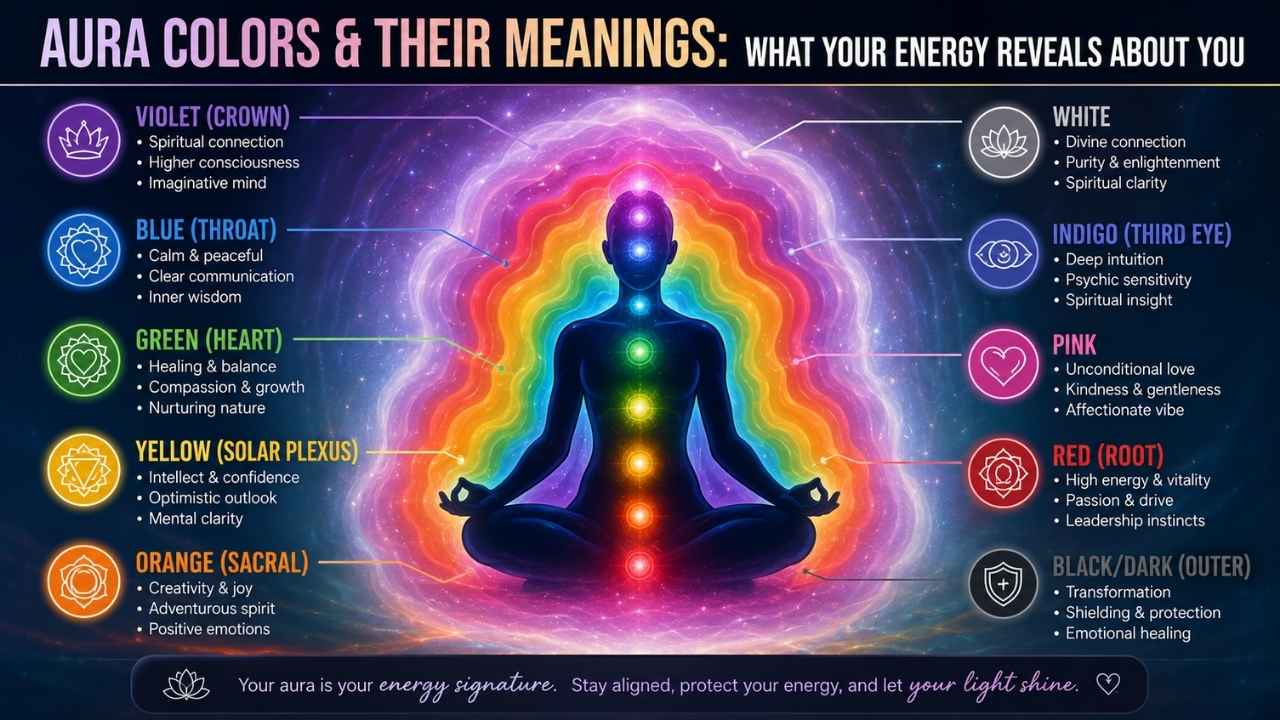
Aura Colors & Meanings Chart: The human aura is often described as an invisible field of energy surrounding every person. It reflects not only physical vitality but also emotional states, mental patterns, and spiritual growth. While invisible to the naked eye for most people, sensitive observers and practitioners of energy work can often perceive its presence.
Understanding aura colors offers a unique pathway to self-discovery, emotional healing, and spiritual insight. Each color represents specific energies, traits, and vibrational qualities, providing clues about a person’s state of mind, health, and personality. By learning to read and interpret aura colors, you can gain a deeper understanding of yourself and others, promote balance, and support personal growth.
Auras are not fixed. They shift and evolve based on experiences, thoughts, and emotions. Observing these changes can guide you toward emotional clarity, healthier relationships, and spiritual development.
This guide explores the most common aura colors, their meanings, and practical applications for energy work and self-awareness.
Understanding the Aura
The aura can be thought of as a luminous field of energy that surrounds every living being. It is composed of multiple layers, each corresponding to physical, emotional, mental, and spiritual aspects.
The outermost layers often relate to higher consciousness and spiritual insight, while inner layers connect with emotional states and personality traits. Together, they form a complex map of energy that shifts with thoughts, feelings, and experiences.
Learning to perceive your own aura or the auras of others requires practice and mindfulness. Some people begin by meditating, focusing on the space around their body, or observing subtle shifts in light and color.
The awareness of aura colors can enhance intuition, empathy, and personal insight. It provides an energetic perspective that complements psychological and emotional understanding.
Red Aura Meaning
Red is a dynamic, powerful color often associated with energy, vitality, and passion. It reflects strong physical energy, determination, and action-oriented tendencies.
People with prominent red in their aura are often energetic, assertive, and motivated to pursue goals. They may have a strong sense of personal power and drive.
However, an overly intense red aura can indicate stress, anger, or impulsiveness. Balancing this energy with grounding practices and mindfulness can prevent burnout and support emotional stability.
Orange Aura Meaning
Orange represents creativity, joy, and emotional expression. It signifies a person who is adventurous, enthusiastic, and socially engaging.
A vibrant orange aura often indicates strong emotional intelligence, openness, and a willingness to explore new experiences.
If orange energy becomes excessive, it may manifest as restlessness or overindulgence. Meditation, artistic expression, and reflective practices can help balance this dynamic energy.
Yellow Aura Meaning
Yellow is the color of intellect, optimism, and clarity. It reflects a sharp mind, analytical skills, and a positive outlook.
Individuals with yellow in their aura often excel in communication, learning, and leadership. They are naturally curious and enjoy exploring ideas.
When yellow energy is unbalanced, it may appear as anxiety or overthinking. Mindful breathing and grounding exercises can help stabilize mental activity and restore harmony.
Green Aura Meaning
Green is associated with healing, balance, and growth. It often reflects compassion, empathy, and emotional resilience.
Those with a strong green aura are usually nurturing, caring, and supportive. They excel in roles that involve helping others, whether emotionally, physically, or spiritually.
An imbalanced green aura may suggest codependency or difficulty setting boundaries. Practices such as energy shielding and self-care can help maintain balance.
Blue Aura Meaning
Blue represents communication, truth, and spiritual awareness. It is often connected to calmness, honesty, and the ability to express oneself clearly.
Individuals with prominent blue in their aura are typically peaceful, reflective, and intuitive. They value harmony and integrity in relationships.
When blue energy becomes unbalanced, it can manifest as emotional withdrawal or difficulty expressing feelings. Mindful speech, creative expression, and meditation can support healthy blue energy.
Indigo Aura Meaning
Indigo is linked to intuition, insight, and spiritual perception. It indicates a deep connection with inner guidance and psychic awareness.
People with indigo auras often possess heightened intuition, introspection, and a strong sense of purpose. They are drawn to spiritual or philosophical pursuits.
Excessive indigo energy may lead to overthinking or detachment from reality. Balancing spiritual awareness with grounded daily practices ensures practical and emotional stability.
Violet Aura Meaning
Violet represents spiritual consciousness, inspiration, and higher awareness. It often indicates a person who is deeply connected to their inner wisdom and spiritual path.
Individuals with violet auras are often visionary, creative, and drawn to spiritual growth. They may feel a strong sense of mission or purpose in life.
Imbalances in violet energy can appear as isolation, confusion, or difficulty manifesting practical goals. Grounding and mindful reflection help integrate spiritual insights into daily life.
White Aura Meaning
White symbolizes purity, clarity, and spiritual protection. It reflects a high level of consciousness, inner peace, and openness to universal energy.
People with a strong white aura often radiate calm, acceptance, and wisdom. They are receptive to guidance and possess a sense of inner harmony.
If unbalanced, white energy may indicate detachment or avoidance of emotional issues. Balancing spiritual and earthly energies promotes holistic well being.
Black or Dark Aura Meaning
Black or dark colors in an aura are often misunderstood. They may indicate blocked energy, unresolved emotions, or protective mechanisms.
Rather than being inherently negative, dark energy signals areas that need attention, healing, or release. Practices such as energy cleansing, meditation, or forgiveness can help transform blocked energy into balance and growth.
Aura Combinations
Many auras are not a single color but a blend of multiple colors. Combinations provide a nuanced view of personality, emotions, and spiritual tendencies.
For example, a red and green aura may indicate a balance between action and compassion, while a blue and violet aura could suggest intuitive communication and spiritual insight.
Interpreting aura combinations requires observing the intensity, placement, and interaction of colors. Over time, awareness of these subtleties deepens self understanding.
How to Observe Your Aura
Observing your own aura is a skill that develops with practice. Start by sitting in front of a neutral background in natural light. Relax your mind and gaze softly around your body.
Some people begin by noticing subtle color fringes or light around their hands, head, or shoulders. Meditation and focused visualization can enhance perception.
Remember that aura observation is subjective. Trusting your intuition and paying attention to emotional responses often provides more insight than exact color identification.
Energy Healing and Aura Work
Aura colors provide valuable guidance for spiritual healing. Understanding your own aura can highlight areas that need balance or growth.
Energy healing practices such as Reiki, chakra alignment, and meditation often work directly with aura layers. Focusing on specific colors can strengthen corresponding energies and promote well being.
For example, someone with an overactive red aura may benefit from grounding exercises, while a person with diminished green energy might focus on compassion and emotional healing.
Aura Cleansing Techniques
Regular cleansing supports clear and balanced energy fields. Common methods include meditation, smudging with sage or incense, sound healing, and mindful breathing.
Visualization is particularly effective. Imagine light surrounding your body, clearing any stagnant energy, and allowing fresh, vibrant energy to flow.
Cleansing not only supports spiritual growth but also enhances intuition, emotional balance, and physical vitality.
Aura and Personality Insights
Aura colors offer a unique lens for self-discovery. Observing patterns and changes over time can reveal personality tendencies, emotional needs, and behavioral patterns.
For example, frequent appearances of yellow may indicate a strong intellectual focus, while recurring violet could suggest a deep spiritual quest. Understanding these patterns promotes self awareness and personal development.
Aura and Relationships
Awareness of aura colors can also inform relationships. Observing the energy of others helps understand motivations, emotional states, and compatibility.
Energetic harmony does not require identical auras but can guide empathy and communication. Respecting and supporting the energetic differences of others strengthens connection and reduces conflict.
Developing Aura Awareness
Developing awareness of your aura is a gradual process. Daily practices such as meditation, mindful observation, and energy exercises support perception.
Pay attention to subtle changes in your emotional, mental, and physical state. Notice patterns in relationships, work, and creative endeavors.
Over time, aura awareness enhances intuition, emotional resilience, and spiritual insight.
Conclusion
Aura colors are more than a mystical concept—they are a practical tool for understanding energy, personality, and spiritual growth. Observing and interpreting your own aura can guide self-discovery, promote healing, and enhance intuition.
Each color carries unique vibrational qualities that reflect aspects of your physical, emotional, mental, and spiritual life. Combinations of colors provide a nuanced picture of personality and energy patterns.
Regular practices such as meditation, energy cleansing, mindful observation, and grounding allow you to balance and strengthen your aura. Over time, this awareness fosters emotional clarity, spiritual alignment, and deeper connection with yourself and others.
By exploring aura colors, you can cultivate a more conscious, harmonious, and empowered approach to life. The journey of understanding your energy field is ongoing, and each moment of observation contributes to growth, insight, and spiritual awakening.