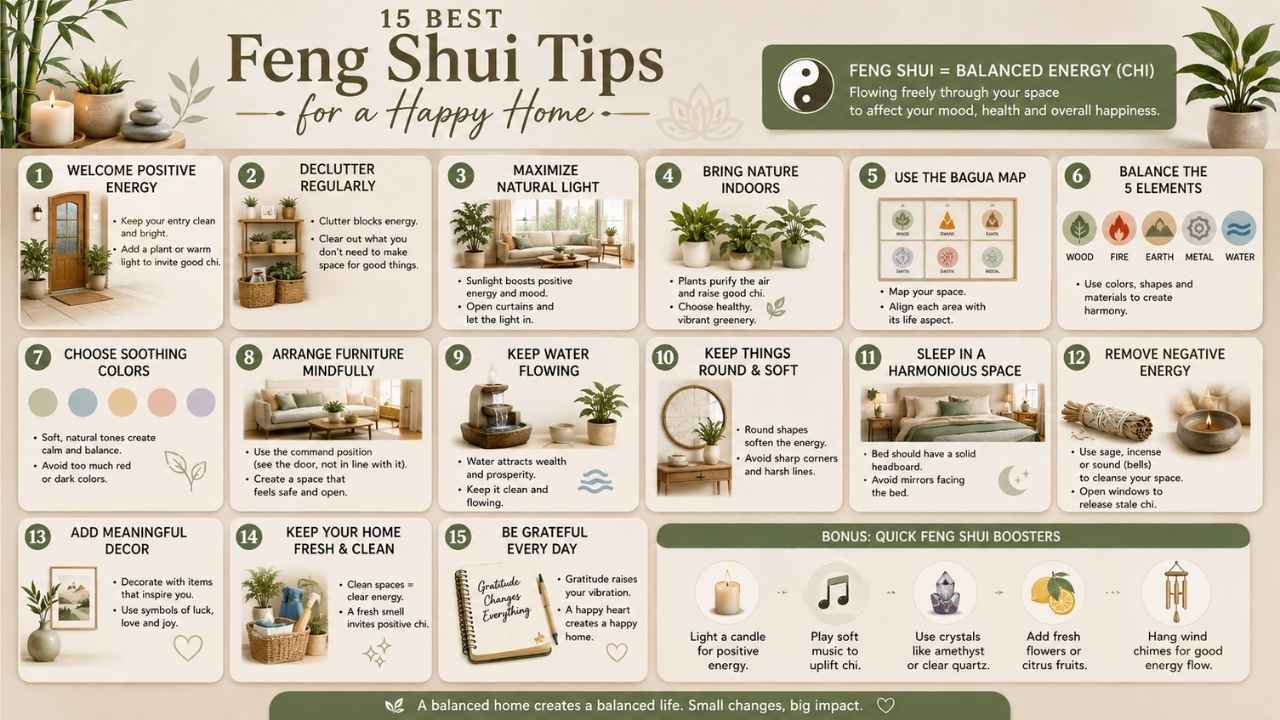
15 Feng Shui Tips for a Happy Home: Feng Shui is an ancient practice that focuses on arranging your living space in a way that supports harmony, balance, and positive energy. The idea is simple but powerful: the environment you live in directly influences your emotions, mindset, health, and overall life experience. When your home feels peaceful and organized, your mind often follows the same pattern.
A happy home is not just about beautiful furniture or expensive decorations. It is about how energy flows through your space and how comfortable, safe, and calm you feel inside it. Feng Shui offers practical and thoughtful ways to improve that flow so your home becomes a place of rest, growth, and emotional strength.

In this guide, you will explore fifteen simple but meaningful Feng Shui tips that can help you create a home filled with balance, warmth, and positive energy. These ideas are easy to apply and focus on small changes that can make a noticeable difference in daily life.
Keep the Entrance Clean and Welcoming
The entrance of your home is considered the main gateway for energy. In Feng Shui, it is believed that energy enters your life through this space first. A cluttered, dark, or blocked entrance can create stagnant energy, while a clean and welcoming entrance allows fresh energy to flow in.

Keeping shoes organized, removing unnecessary items, and ensuring good lighting can instantly improve the feel of your entrance. Adding a small plant or a simple decorative element can also create a sense of warmth and invitation.
When your entrance feels open and calm, it sets a positive tone for everything that follows inside your home.

Remove Clutter to Allow Energy Flow
Clutter is one of the biggest obstacles to good Feng Shui. It is believed to trap old energy and block new opportunities from entering your life. A cluttered space often leads to mental confusion, stress, and lack of focus.
Start by identifying areas in your home that feel crowded or unused. This can include drawers, corners, storage spaces, or even digital clutter on your devices. Removing unnecessary items creates space not just physically but emotionally as well.

When your surroundings are organized, your mind naturally feels lighter and more focused. This simple step is one of the most powerful ways to improve the energy of your home.
Let Natural Light Enter Freely
Natural light is considered a strong source of positive energy in Feng Shui. It represents clarity, vitality, and growth. A home that receives plenty of sunlight often feels more alive and uplifting.

Keep windows clean and avoid blocking them with heavy furniture or dark curtains. If possible, allow sunlight to enter different rooms throughout the day. Even small changes like opening curtains in the morning can shift the energy of a space.
If natural light is limited, you can use warm artificial lighting to create a similar sense of brightness and comfort.
Use Indoor Plants for Fresh Energy
Plants are a symbol of life and growth in Feng Shui. They help balance energy, improve air quality, and bring a sense of calmness into the home. Greenery is believed to absorb negative energy and replace it with fresh and vibrant energy.
You can place plants in living rooms, balconies, or near windows. However, it is important to keep them healthy, as dried or dying plants can have the opposite effect.
Choosing plants with soft and rounded leaves is often recommended because they are believed to promote gentle and peaceful energy.
Maintain a Balanced Bedroom Environment
The bedroom is one of the most important areas in Feng Shui because it directly affects rest, relationships, and emotional recovery. A calm and balanced bedroom supports better sleep and emotional stability.
Avoid placing too many electronic devices in the bedroom, as they can disturb relaxation. Keep the bed in a position where you can see the door without being directly in line with it. This is believed to create a sense of safety and control.
Soft colors, minimal clutter, and comfortable bedding can help create a peaceful atmosphere that supports deep rest.
Position Furniture for Smooth Energy Flow
Furniture placement plays a key role in how energy moves through a room. When furniture blocks pathways or feels too crowded, energy can become stuck. This may lead to discomfort or restlessness.
Arrange furniture in a way that allows easy movement and open space. Avoid placing large objects directly in front of doors or pathways. Instead, create a natural flow where each item has enough space to breathe.
Balanced placement creates a sense of order and comfort, making your home feel more harmonious.
Use Calming Colors Throughout the Home
Colors have a strong emotional impact and are an important part of Feng Shui. Soft, natural tones are often recommended for creating a peaceful environment. Colors like light green, beige, soft blue, and warm earth tones are believed to promote relaxation and balance.
Bright or overly intense colors can be used in small amounts but should not dominate a space. The goal is to create visual harmony rather than overstimulation.
Choosing colors that feel comfortable to you personally is also important because Feng Shui encourages emotional connection with your environment.
Keep the Kitchen Clean and Organized
The kitchen represents nourishment and abundance in Feng Shui. It is considered the heart of the home because it supports physical well being and family connection.
Keeping the kitchen clean, organized, and functional is essential. Regularly remove expired food, clean surfaces, and ensure that appliances are in good condition. A tidy kitchen supports a sense of stability and care in the household.
Even small habits like washing dishes on time or organizing pantry items can improve the overall energy of the home.
Fix Broken or Damaged Items
Broken items are believed to hold stagnant or negative energy in Feng Shui. They can create a sense of neglect and block positive flow in your environment.
Repairing or replacing damaged furniture, appliances, or decor can help restore balance. This includes small things like broken handles, leaking taps, or malfunctioning lights.
Taking care of your belongings reflects care for your environment and helps maintain a healthy energetic flow.
Create a Peaceful Living Room Atmosphere
The living room is where family members gather and where guests are welcomed. It represents connection and social energy in Feng Shui. A peaceful living room encourages bonding and relaxation.
Arrange seating in a way that promotes conversation and openness. Avoid overcrowding the space with too many items. Keep it comfortable, inviting, and well balanced.
Adding soft lighting, cushions, or natural elements can make the space feel more harmonious and welcoming.
Avoid Sharp Corners Facing Key Areas
Sharp corners in furniture or decor are sometimes referred to as creating “cutting energy” in Feng Shui. This is believed to cause discomfort or tension in a space when directly facing important areas like beds or seating.
Where possible, choose furniture with rounded edges or position sharp corners away from frequently used areas. This helps create a softer and more comfortable environment.
Even small adjustments in placement can improve the overall feeling of the room.
Use Mirrors Wisely in the Home
Mirrors are powerful elements in Feng Shui because they reflect energy. When used correctly, they can make spaces feel larger, brighter, and more open.
However, placement is important. Avoid placing mirrors directly facing the bed or main entrance, as this is believed to cause energy imbalance. Instead, use mirrors to reflect natural light or pleasant views.
When positioned thoughtfully, mirrors can enhance positive energy and improve the sense of space.
Maintain Clean Bathrooms for Energy Balance
Bathrooms are associated with energy release and cleansing in Feng Shui. Keeping them clean and well maintained is important to prevent energy loss or imbalance.
Fix leaks, keep doors closed when not in use, and ensure proper ventilation. Adding small decorative touches like plants or calming colors can help balance the energy.
A clean bathroom supports a healthier and more refreshed home environment.
Add Personal and Meaningful Decor
A happy home should reflect the personality and memories of the people living in it. Personal items such as photographs, artwork, or meaningful objects help create emotional warmth.
However, balance is important. Avoid overcrowding surfaces with too many decorative items. Choose pieces that truly bring joy and positive feelings.
When your home reflects your story, it naturally feels more comforting and aligned with your energy.
Encourage Fresh Air and Ventilation
Fresh air plays a crucial role in maintaining positive energy flow. Stale air can make a space feel heavy or stagnant, while fresh air brings clarity and renewal.
Open windows regularly to allow air circulation. Even a few minutes of ventilation each day can refresh the energy of your home. Using natural scents or light aromas can also enhance the feeling of freshness.
Good airflow supports both physical health and emotional well being.
Conclusion Creating Harmony Through Feng Shui
Feng Shui is not about perfection or strict rules. It is about creating awareness of how your surroundings influence your life. Small, thoughtful changes in your home can significantly improve your sense of peace, comfort, and emotional balance.
By applying these fifteen Feng Shui tips, you begin to shape an environment that supports positivity, relaxation, and harmony. A happy home is built through intention, care, and consistent attention to the spaces you live in every day.
When your home feels balanced, your mind and life often follow the same rhythm, creating a more peaceful and fulfilling lifestyle.