What Is a Bagua Map: Feng Shui has been practiced for thousands of years as a way of creating harmony between people and their surroundings. At its core, Feng Shui is based on the belief that the spaces we live and work in influence our energy, emotions, relationships, health, and overall well being. One of the most important tools used in Feng Shui is the Bagua Map.
For beginners, the Bagua Map may seem mysterious or complicated. However, once understood, it becomes a practical guide that helps identify different energy areas within a home or workspace. By applying the Bagua Map correctly, individuals can create environments that feel balanced, welcoming, and supportive of their goals.

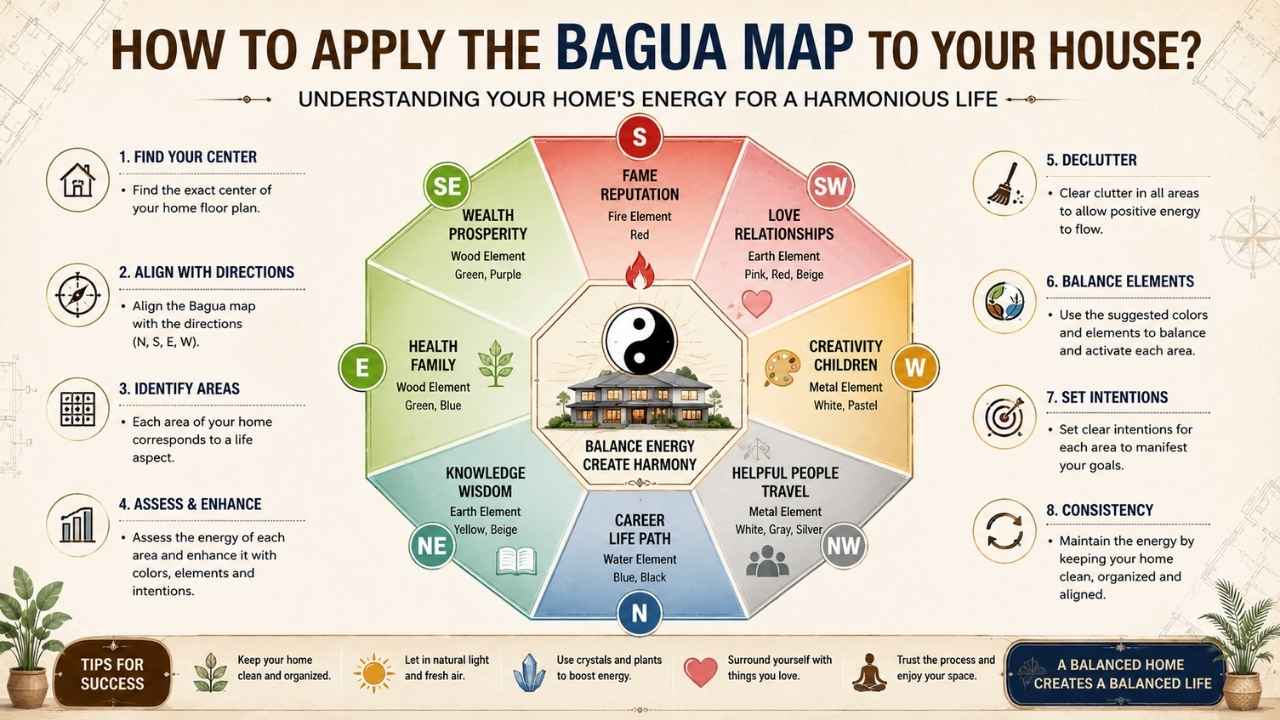
The word Bagua translates to “eight areas” and refers to a system that divides a space into sections, each connected to a specific aspect of life. These areas include wealth, relationships, career, health, creativity, knowledge, family, helpful people, and personal growth. At the center of the map is an area representing overall balance and well being.
Understanding how these energy zones work allows homeowners to make intentional design choices that support harmony and positive energy flow. Whether you are interested in Feng Shui for spiritual reasons, interior design, or personal growth, learning about the Bagua Map can provide valuable insights into the connection between your environment and your daily life.

Understanding the Purpose of the Bagua Map
The Bagua Map acts as an energetic blueprint for a space.
Rather than focusing solely on physical layout, it considers how different areas of a home correspond to various life experiences.

Each section of the map represents a category of life that may be influenced by the energy present in that area.
The purpose is not to create perfection.

Instead, it encourages awareness.
By understanding the energetic symbolism of each section, people can identify areas that may benefit from attention, organization, or enhancement.

The Bagua Map provides a framework for creating environments that feel supportive and balanced.
The Origins of the Bagua Map
The Bagua Map has roots in ancient Chinese philosophy and Feng Shui traditions.
It is closely connected to concepts such as balance, natural cycles, and the flow of life energy.
For centuries, practitioners observed how environmental conditions influenced human experiences.

Over time, systems were developed to help create harmony between people and their surroundings.
The Bagua Map emerged as one of the most widely recognized tools within Feng Shui practice.

Today, it continues to be used around the world as a guide for home design, organization, and energetic awareness.
Understanding Energy Flow in Feng Shui
One of the central ideas in Feng Shui is the concept of energy flow.

This energy is believed to move throughout homes, workplaces, and outdoor environments.
When energy flows smoothly, spaces often feel comfortable, peaceful, and inviting.

When energy becomes blocked or stagnant, spaces may feel stressful, cluttered, or uncomfortable.
The Bagua Map helps identify where attention may be needed to encourage balanced energy movement.
Simple changes such as improving organization, increasing natural light, or adding meaningful objects can influence how a space feels.
The Nine Areas of the Bagua Map
The Bagua Map is divided into nine sections.
Each area represents a specific aspect of life and personal experience.
Together, these sections create a complete picture of balance and harmony.
The center area connects all other sections and symbolizes overall well being.
Understanding each area individually helps create a deeper appreciation for how the Bagua Map functions as a whole.
The Wealth and Abundance Area
The wealth section is often associated with prosperity, abundance, and opportunities.
This area symbolizes not only financial resources but also gratitude and appreciation for what is already present.
When focusing on this section, many people choose to emphasize organization, beauty, and symbols that represent growth and abundance.
The goal is not simply attracting money.
It is cultivating an attitude of prosperity and possibility.
The Fame and Reputation Area
This section relates to personal recognition, reputation, and how individuals are perceived by others.
It represents confidence, visibility, and self expression.
Supporting this area often involves creating spaces that reflect personal values and accomplishments.
A balanced reputation area encourages authenticity and confidence rather than external validation alone.
The Love and Relationships Area
The relationship area focuses on partnerships, connection, and emotional harmony.
While often associated with romantic relationships, it also reflects friendships, family bonds, and meaningful connections.
This area encourages balance, communication, and mutual support.
Many people use this section as a reminder to nurture healthy and fulfilling relationships.
The Family and Community Area
The family section represents roots, support systems, and personal history.
It reflects the relationships that help shape identity and provide stability.
A harmonious family area encourages feelings of belonging, connection, and emotional support.
Strengthening this area often involves honoring traditions, memories, and meaningful relationships.
The Health and Balance Center
At the center of the Bagua Map is the health and balance area.
This section connects all other life aspects.
Because it sits at the heart of the map, it symbolizes overall well being and harmony.
A balanced center encourages stability and integration.
When this area feels organized and welcoming, it often supports a sense of calm throughout the entire home.
The Creativity and Children Area
This section represents creativity, inspiration, and joyful expression.
It reflects the ability to generate new ideas and embrace imagination.
Creativity extends beyond artistic activities.
Problem solving, innovation, and personal projects all relate to this area.
Supporting creativity encourages growth, exploration, and fresh perspectives.
The Knowledge and Wisdom Area
The knowledge section focuses on learning, reflection, and self development.
It encourages curiosity and personal growth.
Many people associate this area with study spaces, reading, and mindfulness practices.
A balanced knowledge area supports thoughtful decision making and deeper self awareness.
It reminds us that growth is a lifelong journey.
The Career and Life Path Area
This section relates to professional development, purpose, and life direction.
It symbolizes movement, progress, and opportunities.
The career area encourages reflection on personal goals and aspirations.
Supporting this section often involves creating environments that inspire focus, productivity, and motivation.
The emphasis is not solely on work but also on meaningful direction in life.
The Helpful People and Travel Area
The final section focuses on support, guidance, and beneficial connections.
It represents mentors, friends, opportunities, and assistance received from others.
This area reminds us that success rarely happens alone.
Healthy relationships and supportive networks contribute significantly to personal growth and achievement.
It also symbolizes exploration, travel, and new experiences.
How to Apply a Bagua Map to Your Home
Applying a Bagua Map begins by identifying the main entrance of your home.
The map is then aligned according to the chosen Feng Shui approach.
Once positioned, each section corresponds to a specific area within the home.
This process helps identify which rooms and spaces connect with different life categories.
The purpose is not to judge or criticize a space.
Instead, it encourages awareness and intentional improvement.
Even small adjustments can create meaningful changes in how a home feels.
The Importance of Decluttering
One of the most common Feng Shui recommendations involves reducing clutter.
Clutter can create visual stress and make spaces feel crowded.
From a Feng Shui perspective, excessive clutter may also interfere with smooth energy flow.
Organized environments often feel calmer and more inviting.
Decluttering does not require perfection.
It simply involves creating space for movement, comfort, and functionality.
Many people notice immediate improvements in mood and clarity after simplifying their surroundings.
Creating Harmony Through Design
The Bagua Map encourages intentional design choices.
Furniture placement, colors, lighting, artwork, and decorative elements all contribute to the atmosphere of a space.
The goal is not to follow rigid rules.
Instead, it is to create environments that support comfort, balance, and personal values.
A harmonious home reflects both functionality and beauty.
When design choices align with individual needs and preferences, spaces become more enjoyable and supportive.
Common Misconceptions About the Bagua Map
Many misconceptions exist regarding Feng Shui and the Bagua Map.
Some people believe it guarantees instant results or magical transformations.
In reality, the Bagua Map functions as a symbolic and practical tool for awareness.
It encourages intentional living and thoughtful environmental design.
Its value lies in helping people examine their surroundings and make choices that support their goals and well being.
The process is gradual rather than immediate.
Personal Growth Through Environmental Awareness
One of the most powerful aspects of the Bagua Map is its ability to encourage self reflection.
As individuals examine different areas of their homes, they often begin examining corresponding areas of their lives.
A cluttered workspace may inspire greater career focus.
An neglected relationship area may encourage deeper connection with loved ones.
The environment often serves as a mirror reflecting internal priorities and habits.
This awareness creates opportunities for meaningful growth.
The Long Term Benefits of Using a Bagua Map
Over time, applying Bagua principles can contribute to greater organization, mindfulness, and intentional living.
Many people report feeling more connected to their homes and more aware of how their surroundings influence their emotions.
The process often encourages positive habits such as decluttering, goal setting, self reflection, and environmental care.
While experiences vary, the overall objective remains the same.
Creating spaces that support well being and harmony.
Conclusion
The Bagua Map is one of the most valuable tools in Feng Shui for understanding energy flow and creating balance within a home. By dividing a space into nine meaningful areas, it offers a practical framework for exploring the connection between environment and life experiences.
Each section of the map represents a different aspect of personal growth, relationships, health, creativity, career, and abundance. Through awareness, organization, and intentional design choices, individuals can create environments that feel more supportive and harmonious.
The true power of the Bagua Map lies not in superstition but in mindfulness. It encourages people to view their homes as reflections of their priorities, habits, and aspirations. By making thoughtful changes and maintaining balance, anyone can use the principles of Feng Shui to cultivate a more peaceful, organized, and fulfilling living space.
A harmonious home often begins with awareness, and the Bagua Map provides a meaningful guide for that journey.