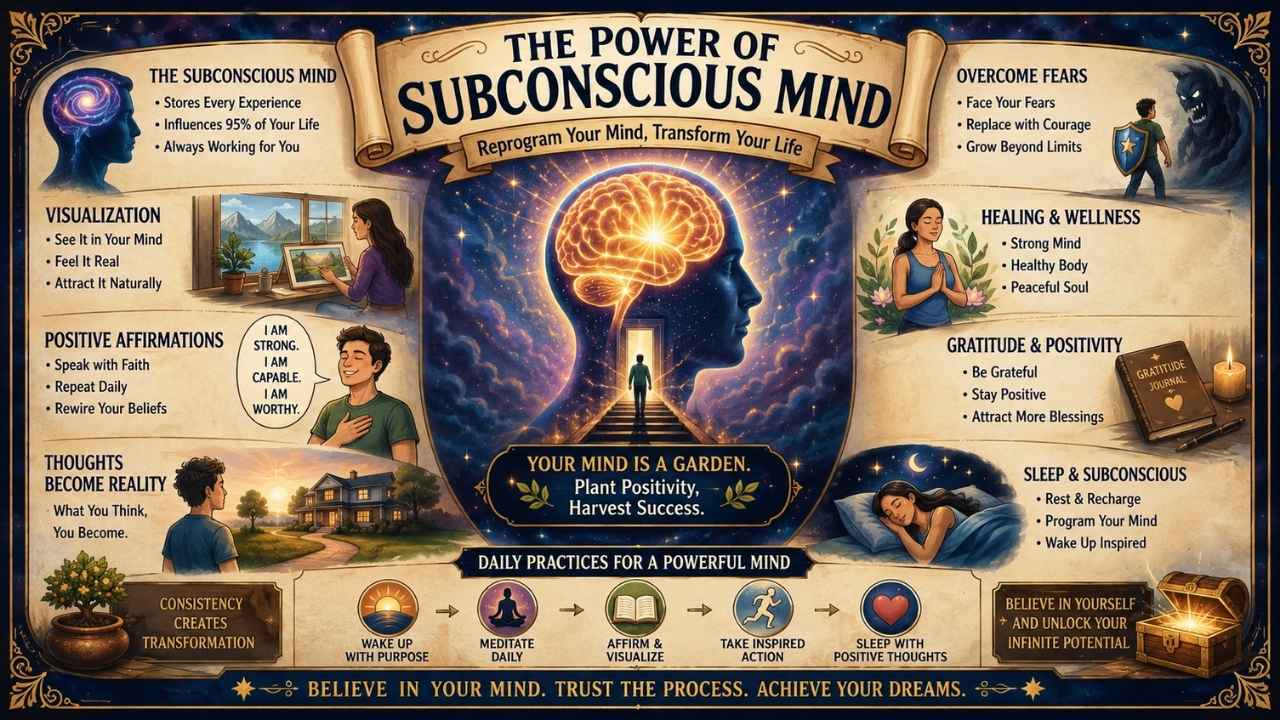
The Power of the Subconscious Mind: The human mind is one of the most powerful tools we possess. While most people are familiar with conscious thinking, far fewer understand the incredible influence of the subconscious mind. Our conscious mind helps us make decisions, solve problems, and interact with the world around us. However, beneath the surface lies the subconscious mind, a powerful force that shapes our beliefs, habits, emotions, behaviors, and ultimately our results in life.
Many personal development experts have emphasized the importance of understanding and working with the subconscious mind. The central idea is simple yet profound. Whatever thoughts, beliefs, and emotions are repeatedly impressed upon the subconscious eventually influence actions, attitudes, and life experiences.

The power of the subconscious mind is not based on magic or wishful thinking. It is based on the principle that our internal beliefs often shape our external reality. The way we think about ourselves, our abilities, our relationships, and our future can significantly impact the choices we make every day.
Learning how the subconscious mind works allows us to replace limiting beliefs with empowering ones, develop positive habits, improve confidence, and create a stronger foundation for success. This article explores the key lessons and success principles associated with understanding and harnessing the power of the subconscious mind.

Understanding the Difference Between the Conscious and Subconscious Mind
The conscious mind is the part of the mind that actively thinks, analyzes, plans, and makes decisions.
It is responsible for logical reasoning and everyday awareness.

The subconscious mind operates below conscious awareness.
It stores memories, beliefs, emotions, habits, and automatic behaviors.

While the conscious mind may decide what you want, the subconscious mind often determines how you behave.
For example, someone may consciously desire success but subconsciously believe they are not worthy of it.

In such cases, subconscious beliefs can create internal resistance that limits progress.
Understanding this relationship is the first step toward meaningful personal transformation.

Your Beliefs Shape Your Reality
One of the most important lessons is that beliefs influence behavior.
People often act according to what they believe to be true about themselves.

If someone believes they are capable and resourceful, they are more likely to take action and persist through challenges.
If they believe they are inadequate or destined to fail, they may avoid opportunities and give up quickly.
Many beliefs develop during childhood and become deeply embedded over time.
Because these beliefs often operate automatically, people may not even realize they exist.
Identifying and changing limiting beliefs can create significant improvements in confidence and performance.
The Subconscious Mind Accepts Repetition
The subconscious mind learns through repetition.
Thoughts that are repeated frequently become familiar and eventually feel true.
This principle explains why habits form and why repeated self talk has such a strong influence.
If a person repeatedly tells themselves that they are incapable, the subconscious begins accepting that message.
The same process works in a positive direction.
Consistently reinforcing constructive beliefs can gradually reshape mental patterns.
Repetition is one of the most powerful tools for personal growth.
Small messages repeated daily often create larger changes than occasional bursts of motivation.
The Importance of Positive Self Talk
The words you speak to yourself matter.
Internal dialogue has a direct impact on emotions, confidence, and behavior.
Many people spend years criticizing themselves without realizing how damaging this habit can be.
Negative self talk creates doubt and fear.
Positive self talk encourages confidence and resilience.
Positive self talk does not mean ignoring reality.
It means speaking to yourself in a supportive and constructive manner.
When challenges arise, replacing criticism with encouragement helps create a healthier mindset.
Visualization and Mental Rehearsal
Visualization is a technique that involves mentally imagining desired outcomes.
Athletes, performers, entrepreneurs, and successful individuals often use visualization to prepare for important situations.
The subconscious mind responds strongly to vivid mental images.
When positive outcomes are imagined consistently, confidence often increases.
Visualization creates familiarity.
The mind begins viewing success as something possible rather than something distant.
Mental rehearsal can improve focus, reduce anxiety, and strengthen belief in personal abilities.
Emotions Strengthen Mental Programming
Thoughts become more influential when combined with emotion.
Emotion adds energy and significance to mental experiences.
A belief repeated with strong feeling tends to leave a deeper impression on the subconscious mind.
This is why emotionally charged experiences are often remembered more vividly.
When working toward personal goals, combining positive thoughts with genuine emotion can strengthen their impact.
Enthusiasm, gratitude, excitement, and confidence help reinforce empowering beliefs.
Gratitude Changes Mental Focus
Gratitude is one of the most powerful practices for influencing the subconscious mind.
The human brain naturally pays attention to problems and potential threats.
While this tendency can be useful for survival, it can also create a habit of focusing on negativity.
Gratitude shifts attention toward positive experiences and opportunities.
Regular gratitude practice trains the mind to notice abundance rather than scarcity.
Over time, this shift can improve mood, resilience, and overall outlook on life.
The Role of Faith and Expectation
Expectations often influence outcomes.
People tend to notice opportunities and take actions that align with their expectations.
When someone expects success, they are more likely to persist through obstacles and remain open to possibilities.
When someone expects failure, they may unconsciously avoid opportunities or give up prematurely.
Faith in a positive outcome creates psychological momentum.
It encourages effort, patience, and persistence.
Believing that improvement is possible often becomes the first step toward achieving it.
Replacing Limiting Beliefs
Limiting beliefs are assumptions that restrict growth and potential.
Examples include beliefs such as:
I am not talented enough.
I do not deserve success.
I am too old to change.
I always fail.
These beliefs often operate automatically.
The first step in changing them is awareness.
Once identified, they can be challenged and replaced with more empowering perspectives.
Replacing limiting beliefs requires consistency, patience, and repetition.
Over time, new beliefs become stronger and more influential.
The Power of Habit Formation
Habits are deeply connected to the subconscious mind.
Many daily behaviors occur automatically without conscious effort.
This automatic nature makes habits both powerful and difficult to change.
Successful people often focus on developing positive habits rather than relying solely on motivation.
Small actions repeated consistently eventually become automatic.
The subconscious mind helps transform intentional behaviors into lasting routines.
Building productive habits creates long term success because progress continues even when motivation fluctuates.
Taking Responsibility for Your Thoughts
One of the key principles of personal growth is accepting responsibility for mental habits.
While we cannot always control external events, we can influence how we interpret and respond to them.
Thought awareness is an essential skill.
Notice recurring mental patterns.
Pay attention to beliefs that create fear, doubt, or discouragement.
The more conscious you become of your thinking, the more power you gain to change it.
Responsibility creates freedom.
It shifts focus away from blame and toward growth.
Persistence Creates Results
Meaningful change rarely happens overnight.
Many people become discouraged when they do not see immediate results.
The subconscious mind responds to consistency.
New beliefs and habits require time to become established.
Persistence is often the difference between temporary motivation and lasting transformation.
Small daily improvements may seem insignificant at first, but they accumulate over time.
Success is frequently the result of consistent effort rather than dramatic breakthroughs.
Using Affirmations Effectively
Affirmations are positive statements repeated regularly to reinforce desired beliefs.
When used correctly, affirmations can support confidence and personal growth.
The most effective affirmations feel believable and meaningful.
Examples include:
I am learning and growing every day.
I am capable of overcoming challenges.
I deserve success and happiness.
I trust my ability to find solutions.
Repeated consistently, these statements can help reshape subconscious patterns and encourage positive thinking.
Developing a Success Mindset
A success mindset involves focusing on possibilities rather than limitations.
It encourages learning, adaptability, and resilience.
People with a success mindset view challenges as opportunities for growth.
They understand that setbacks are temporary and often contain valuable lessons.
The subconscious mind responds positively to this perspective because it reduces fear and increases willingness to take action.
Success becomes less about perfection and more about continuous improvement.
The Connection Between Thoughts and Actions
Thoughts influence emotions.
Emotions influence behaviors.
Behaviors influence results.
This sequence highlights the importance of managing internal dialogue.
Positive thinking alone is not enough.
Thoughts must eventually lead to action.
The subconscious mind helps bridge this gap by influencing habits and motivation.
When beliefs and actions align, progress becomes more natural and sustainable.
Creating a Positive Mental Environment
The environment surrounding you affects the subconscious mind.
Books, conversations, media, and relationships all contribute to mental conditioning.
Spending time around supportive people encourages confidence and growth.
Consuming positive and educational content reinforces empowering ideas.
Creating a healthy mental environment supports the development of constructive beliefs and habits.
Success often grows more easily in environments that encourage learning and positivity.
The Long Term Impact of Subconscious Programming
The effects of subconscious programming extend into nearly every area of life.
Career choices, relationships, confidence levels, financial decisions, and personal habits are often influenced by deeply held beliefs.
When negative programming remains unexamined, it can limit potential.
When positive programming is intentionally developed, it can support growth and achievement.
The subconscious mind is constantly learning.
Every thought, experience, and emotional response contributes to this ongoing process.
Understanding this principle allows individuals to become more intentional about their mental habits.
Applying These Principles in Daily Life
Knowledge becomes valuable only when applied.
Understanding the subconscious mind is important, but practical action creates real change.
Begin by observing your thoughts.
Practice gratitude daily.
Use positive affirmations consistently.
Visualize desired outcomes.
Develop empowering habits.
Replace self criticism with self encouragement.
Approach challenges with curiosity rather than fear.
These small actions gradually influence subconscious patterns and support personal growth.
The process requires patience, but the cumulative effect can be remarkable.
Conclusion
The subconscious mind plays a powerful role in shaping thoughts, behaviors, habits, and life experiences. By understanding how it works, individuals can take greater control of their beliefs and create a stronger foundation for success.
Key lessons include the importance of positive self talk, repetition, visualization, gratitude, habit formation, emotional awareness, and persistence. These principles demonstrate that lasting change begins internally before it becomes visible externally.
Success is not simply the result of talent or luck. It is often the outcome of consistent thoughts, beliefs, and actions working together over time.
When you learn to work with your subconscious mind rather than against it, you unlock greater confidence, resilience, and potential. The journey may require patience and effort, but the rewards can influence every aspect of life.
Your subconscious mind is always listening. The messages you repeat today can shape the reality you experience tomorrow.