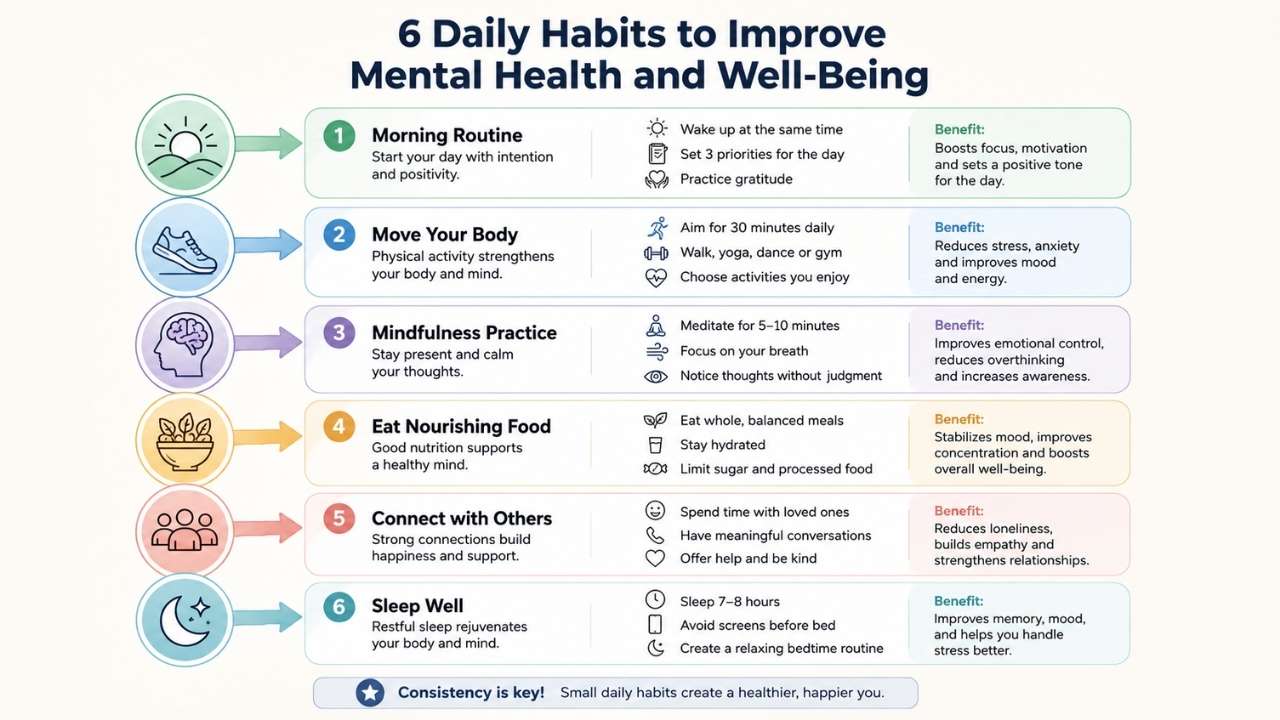
How to Stop Negative Mind Talk: Almost everyone experiences negative self talk at some point in life. It often appears as an inner voice that questions our abilities, criticizes our mistakes, or predicts the worst possible outcomes. Sometimes it whispers quietly in the background, while at other times it becomes so loud that it affects confidence, happiness, and daily decision making.
Negative mind talk can take many forms. It may sound like “I am not good enough,” “I always fail,” or “Nothing ever works out for me.” These thoughts can become automatic over time, making them seem like facts rather than opinions. The challenge is that the more we repeat these messages to ourselves, the more believable they become.

The good news is that negative thinking patterns are not permanent. The human mind has the ability to learn, adapt, and change. With mindfulness, self compassion, and positive thought practices, it is possible to develop a healthier relationship with your thoughts and create a more supportive inner dialogue.
Learning how to stop negative mind talk does not mean forcing yourself to be positive every second of the day. Instead, it means becoming aware of harmful thought patterns, questioning their accuracy, and replacing them with thoughts that are more balanced, realistic, and kind.

This journey requires patience and consistency, but the rewards can be life changing. Greater confidence, emotional resilience, inner peace, and self acceptance often begin with the simple decision to become more conscious of the way we speak to ourselves.
Understanding Negative Mind Talk
Negative self talk is the internal commentary that influences how we view ourselves and our experiences.

This inner dialogue develops over many years. Childhood experiences, social influences, personal disappointments, and stressful situations can all contribute to the beliefs we hold about ourselves.
Sometimes negative thoughts serve a protective purpose. The mind attempts to prepare for challenges or avoid disappointment by imagining worst case scenarios.

However, when these thoughts become constant, they can limit personal growth and reduce emotional well being.
Negative mind talk often feels automatic because it has been repeated so many times.

The first step toward change is recognizing that thoughts are mental events, not absolute truths.
Just because a thought appears in your mind does not mean it accurately reflects reality.

Recognizing Common Negative Thinking Patterns
Many forms of negative self talk follow predictable patterns.
One common pattern is catastrophizing.
This occurs when the mind immediately jumps to the worst possible outcome.
Another pattern is all or nothing thinking.
In this case, situations are viewed as complete successes or complete failures with no middle ground.
Personalization is another common habit.
People blame themselves for circumstances that may be outside their control.
Comparison is also widespread.
Constantly measuring yourself against others often creates feelings of inadequacy and self criticism.
Recognizing these patterns allows you to interrupt them before they gain momentum.
Awareness creates the opportunity for change.
Becoming Aware of Your Inner Dialogue
Many people are unaware of how frequently they criticize themselves.
Negative thoughts can become so familiar that they blend into the background of everyday life.
Begin paying attention to the language you use internally.
Notice how you respond to mistakes, setbacks, or difficult situations.
Would you speak to a close friend the same way you speak to yourself?
This question often reveals the harshness of our internal dialogue.
Mindful awareness does not require judgment.
Simply observe your thoughts with curiosity.
The goal is to become conscious of patterns that may have been operating automatically for years.
The Power of Mindfulness
Mindfulness is one of the most effective tools for reducing negative mind talk.
Mindfulness involves paying attention to the present moment without judgment.
When practicing mindfulness, you learn to observe thoughts rather than becoming completely identified with them.
Instead of saying, “I am a failure,” mindfulness encourages you to notice, “I am having a thought that I am a failure.”
This small shift creates emotional distance.
You become the observer of the thought rather than the thought itself.
Over time, mindfulness reduces the influence of negative thinking patterns and strengthens emotional resilience.
Learning to Pause Before Reacting
Negative thoughts often trigger emotional reactions.
A critical thought may lead to sadness, anxiety, frustration, or self doubt.
One helpful practice is creating a pause between the thought and your reaction.
When a negative thought appears, stop for a moment.
Take a slow breath.
Observe the thought without immediately accepting it as truth.
Ask yourself whether the thought is helpful, accurate, or necessary.
This pause interrupts automatic mental habits and creates space for more intentional responses.
Challenging Negative Thoughts
Not every thought deserves to be believed.
When negative mind talk appears, examine it carefully.
Ask questions such as:
Is there evidence supporting this thought?
Is there evidence against it?
Would I say this to someone I care about?
Am I viewing the situation fairly?
Many negative beliefs begin to lose their power when examined objectively.
The goal is not blind optimism.
The goal is balanced thinking.
Balanced thoughts are often more realistic and supportive than overly negative conclusions.
Practicing Self Compassion
Self compassion is the practice of treating yourself with kindness during difficult moments.
Many people believe self criticism motivates improvement.
In reality, constant criticism often creates fear, stress, and emotional exhaustion.
Self compassion recognizes that mistakes and imperfections are part of being human.
Instead of attacking yourself for errors, respond with understanding.
Imagine how you would comfort a friend experiencing the same challenge.
Offer yourself that same level of care.
Research consistently shows that self compassion supports resilience, motivation, and emotional well being.
Replacing Harsh Language
Words carry emotional power.
The language used in self talk directly influences how you feel.
Notice harsh statements such as:
I always mess things up.
I am not good enough.
I never do anything right.
Replace these statements with more balanced alternatives.
For example:
I made a mistake, but I can learn from it.
I am still growing and improving.
I have strengths as well as challenges.
These replacements are not unrealistic affirmations.
They are more accurate and compassionate ways of viewing yourself.
The Role of Positive Affirmations
Affirmations can be useful when practiced authentically.
The most effective affirmations feel believable and meaningful.
Rather than repeating statements that feel impossible, focus on realistic messages.
Examples include:
I am capable of learning new skills.
I deserve kindness and respect.
I can handle challenges one step at a time.
I am worthy regardless of my mistakes.
Repeated consistently, these messages can gradually reshape mental habits and strengthen confidence.
Gratitude as a Mental Reset
Gratitude helps redirect attention toward positive aspects of life.
Negative thinking often focuses on problems, limitations, and fears.
Gratitude broadens perspective.
Each morning or evening, identify several things you appreciate.
They can be simple.
A supportive friend.
A peaceful moment.
A lesson learned.
A healthy meal.
Regular gratitude practice trains the mind to notice positive experiences more frequently.
This does not eliminate challenges, but it creates greater emotional balance.
Limiting Comparison With Others
Comparison is one of the most common sources of negative self talk.
Social media often amplifies this habit by exposing people to carefully selected highlights of other lives.
The problem is that comparisons are usually incomplete.
You see another person’s successes without seeing their struggles.
Focus instead on your own journey.
Measure progress against your previous self rather than someone else’s circumstances.
Personal growth becomes more meaningful when it is based on your unique path.
Building a Positive Mental Environment
Your environment influences your thinking.
The people you spend time with, the content you consume, and the conversations you engage in all affect your mindset.
Seek environments that encourage growth, kindness, and positivity.
Spend time with supportive individuals.
Read inspiring books.
Listen to uplifting conversations.
Reduce exposure to unnecessary negativity whenever possible.
A positive environment makes healthy thinking habits easier to maintain.
Journaling for Mental Clarity
Writing is a powerful tool for understanding thoughts.
When worries and criticisms remain inside the mind, they often appear larger than they truly are.
Journaling brings thoughts into the open.
Write freely about your concerns, fears, and experiences.
Once written down, examine them objectively.
You may notice recurring themes or exaggerated assumptions.
Journaling creates space for reflection and often reveals solutions that were not initially obvious.
Practicing Daily Self Encouragement
Most people encourage friends and family far more often than they encourage themselves.
Make self encouragement a daily habit.
Acknowledge effort, progress, and achievements.
Celebrate small victories.
Recognize growth even when results are not perfect.
Positive reinforcement strengthens motivation and confidence.
The more often you acknowledge your strengths, the less influence negative self talk tends to have.
Accepting Imperfection
Perfectionism fuels negative thinking.
When unrealistic standards are imposed, every mistake feels like evidence of failure.
Accepting imperfection creates freedom.
Growth does not require perfection.
Learning does not require perfection.
Success does not require perfection.
Mistakes are valuable teachers.
Every successful person has experienced setbacks, failures, and challenges.
Accepting this reality reduces self criticism and encourages persistence.
Creating a Consistent Mindfulness Practice
Consistency matters more than intensity.
A few minutes of mindfulness each day can gradually transform your relationship with thoughts.
Practice mindful breathing.
Observe sensations in the body.
Notice thoughts without judgment.
Return attention to the present moment whenever the mind wanders.
These simple exercises strengthen awareness and reduce the automatic power of negative thinking patterns.
Developing Emotional Resilience
Life will always include uncertainty, setbacks, and difficult experiences.
The goal is not eliminating all negative thoughts.
The goal is developing resilience.
Resilience allows you to experience challenges without becoming overwhelmed by them.
It involves trusting your ability to cope, learn, and adapt.
Every time you respond to a negative thought with awareness and compassion, you strengthen emotional resilience.
Small moments of mindful response create lasting change over time.
The Long Term Benefits of Positive Thought Practices
As negative self talk decreases, many areas of life begin to improve.
Confidence often grows.
Relationships become healthier.
Stress becomes easier to manage.
Decision making becomes clearer.
People frequently report feeling more peaceful, optimistic, and emotionally balanced.
The transformation may be gradual, but it is meaningful.
Every compassionate thought creates a foundation for greater well being.
Every mindful moment strengthens awareness.
Every act of self kindness supports personal growth.
Conclusion
Negative mind talk can feel powerful, but it does not have to control your life. Thoughts are not permanent truths. They are mental experiences that can be observed, questioned, and transformed.
By practicing mindfulness, self compassion, gratitude, journaling, and positive thought habits, you can develop a healthier relationship with your mind. Instead of becoming trapped by criticism and doubt, you learn to respond with awareness, understanding, and balance.
Change does not happen overnight. It occurs through small daily choices repeated consistently over time.
Every moment you choose kindness over criticism, awareness over automatic reaction, and compassion over judgment, you take another step toward emotional freedom.
Your inner voice will always influence your life. The more supportive, patient, and encouraging that voice becomes, the more confident, peaceful, and resilient you can become as well.