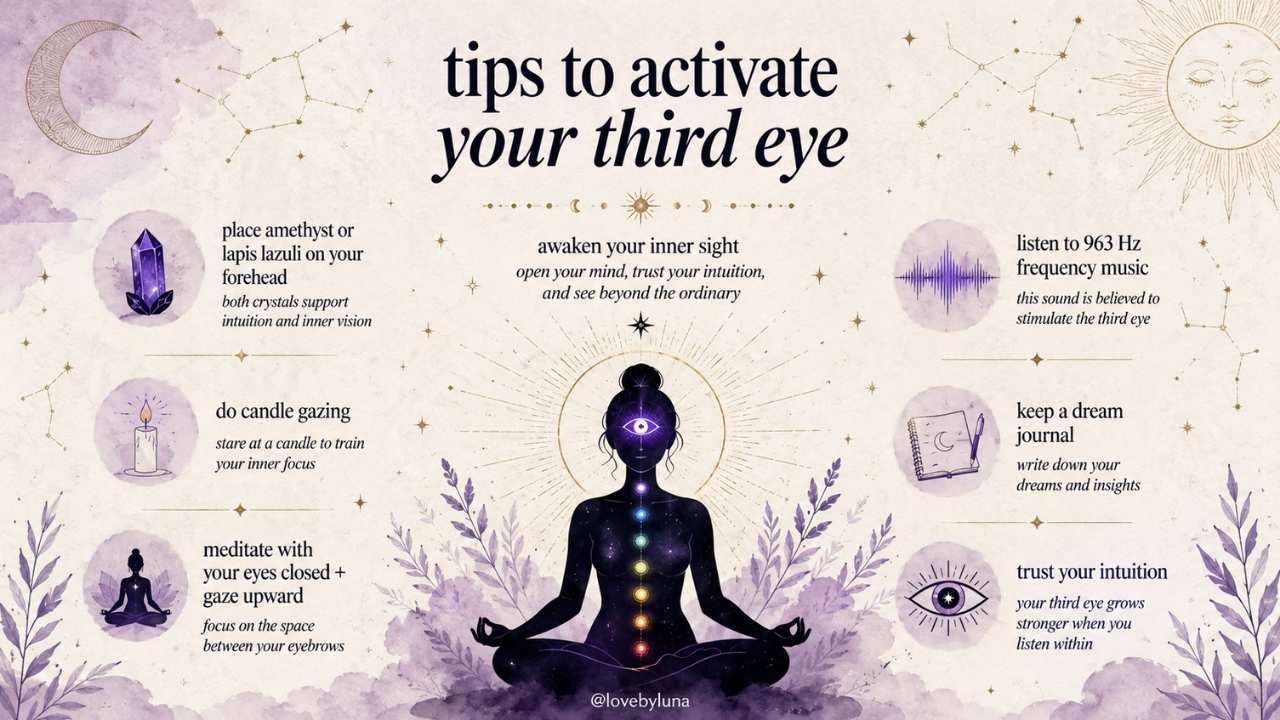
Third Eye Opening Exercises for Beginners: The concept of the third eye has fascinated spiritual seekers, philosophers, and meditation practitioners for centuries. Across various traditions, the third eye is often associated with intuition, inner wisdom, heightened awareness, and deeper self understanding. While interpretations differ from culture to culture, many people view the third eye as a symbolic center of perception that allows individuals to look beyond ordinary experiences and connect with deeper levels of consciousness.
For beginners, the idea of opening the third eye can sound mysterious or even intimidating. Some imagine dramatic experiences or instant spiritual transformation. In reality, personal growth and spiritual awareness usually develop gradually through consistent practice, self reflection, and mindfulness. The journey is often less about acquiring supernatural abilities and more about becoming more aware of thoughts, emotions, intuition, and the deeper dimensions of life.
Many people begin exploring third eye practices because they feel drawn toward self discovery. Others are seeking greater clarity, stronger intuition, or a deeper sense of purpose. Regardless of the motivation, the process is often deeply personal and unique to each individual.
Exercises commonly associated with third eye development are designed to improve focus, mindfulness, concentration, and self awareness. These practices encourage people to slow down, pay attention to their inner world, and develop a stronger connection with their intuition.
As with any spiritual practice, patience is essential. Growth happens naturally when approached with curiosity, openness, and balance. There is no need to force experiences or compare progress with others. Every person follows a different path, and each step of the journey contributes to greater understanding.
Understanding the Symbolism of the Third Eye
The third eye is often described as a symbol of expanded awareness and inner perception. Rather than being a physical eye, it represents the ability to see beyond surface appearances and recognize deeper truths.
Many spiritual traditions associate the third eye with insight, wisdom, imagination, and intuitive understanding. It is often linked to self reflection and the ability to observe life from a broader perspective.
People frequently describe third eye development as becoming more aware of patterns, emotions, and subtle aspects of experience that may have previously gone unnoticed.
This symbolic interpretation can be helpful for beginners because it shifts the focus away from extraordinary expectations and toward personal growth. The goal is not to escape reality but to engage with life more consciously and intentionally.
Developing awareness often begins with simple practices that encourage observation, mindfulness, and reflection. Over time, these habits can lead to meaningful changes in perception and understanding.
Creating the Right Environment for Practice
Before beginning any spiritual exercise, it is helpful to create an environment that supports relaxation and focus.
A quiet space free from distractions can make it easier to concentrate and turn attention inward. This does not require a special meditation room or expensive equipment. A comfortable chair, a peaceful corner, or a calm outdoor setting can be enough.
Many people find that soft lighting and a clean environment help create a sense of calm. Others prefer practicing early in the morning or before bedtime when the mind is naturally quieter.
Consistency is often more important than perfection. A simple daily practice performed regularly tends to be more effective than occasional lengthy sessions.
Creating a supportive environment signals to the mind that it is time to slow down and become present.
Mindful Breathing as a Foundation
Breathing exercises are among the most accessible and effective practices for beginners.
The breath acts as an anchor for attention, helping calm mental activity and increase awareness of the present moment.
A simple exercise involves sitting comfortably and focusing on the natural rhythm of breathing. Notice each inhale and exhale without trying to control them.
When thoughts arise, gently return attention to the breath.
This practice strengthens concentration and develops the ability to observe thoughts without becoming overwhelmed by them.
Many people discover that mindful breathing creates a sense of clarity and inner stillness. These qualities provide a strong foundation for deeper spiritual exploration.
Regular breathing exercises also support relaxation, emotional balance, and stress reduction.
Meditation for Inner Awareness
Meditation is one of the most commonly recommended practices for developing intuition and self awareness.
For beginners, meditation does not require complex techniques. The goal is simply to sit quietly and observe the present moment.
Start with a few minutes each day and gradually increase the duration as comfort grows.
During meditation, focus on the breath, bodily sensations, or a chosen point of attention. When distractions occur, acknowledge them and gently return focus.
Over time, meditation helps create space between thoughts and reactions. This increased awareness often leads to greater emotional balance and clearer intuition.
Many people report that regular meditation enhances their ability to recognize inner guidance and make decisions with greater confidence.
Visualization Exercises
Visualization is another practice often associated with third eye development.
This exercise involves creating mental images with intention and focus.
Begin by closing your eyes and imagining a peaceful place. Picture the details as clearly as possible. Notice colors, sounds, textures, and sensations.
The purpose is not to force vivid imagery but to strengthen concentration and imagination.
As visualization skills develop, many people find it easier to focus their attention and access creative insights.
Visualization can also be used to reinforce positive intentions and encourage personal growth.
The process helps train the mind to maintain focus while remaining open to new perspectives.
Developing Intuitive Awareness
Intuition is often described as a quiet inner knowing that arises without deliberate reasoning.
Many people experience intuitive impressions but dismiss them because they seem subtle or difficult to explain.
Developing intuition begins with learning to pay attention.
Notice feelings, impressions, and insights that arise during daily life. Keep a journal and record intuitive experiences without judging them.
Over time, patterns may become more apparent.
The goal is not to predict the future or seek certainty in every situation. Instead, it is to cultivate trust in one’s ability to recognize inner wisdom.
Intuition often becomes clearer when the mind is calm and distractions are reduced.
Practicing Observation Without Judgment
One of the most valuable exercises for consciousness expansion involves observing thoughts and emotions without judgment.
Most people spend much of their lives reacting automatically to internal experiences. Thoughts are accepted as facts, and emotions immediately influence behavior.
Observation creates space.
When a thought appears, notice it without labeling it good or bad.
When an emotion arises, acknowledge it without trying to suppress or control it.
This practice encourages self awareness and reduces identification with mental activity.
Over time, individuals often develop a greater sense of inner freedom and clarity.
Connecting With Nature
Nature has long been regarded as a powerful setting for reflection and spiritual growth.
Spending time outdoors encourages mindfulness and presence.
Walk slowly through a park, forest, or garden while paying attention to sounds, colors, and sensations.
Notice the details that are often overlooked during daily routines.
This simple exercise can create a sense of connection and wonder.
Many people find that nature helps quiet mental noise and encourages deeper awareness.
Regular time in natural environments can support emotional balance and provide opportunities for reflection.
Journaling for Self Discovery
Writing is a powerful tool for exploring thoughts, emotions, and intuitive insights.
A journal provides a safe space for reflection without judgment.
After meditation or other spiritual exercises, write about observations and experiences.
Record questions, inspirations, dreams, and moments of clarity.
Over time, journaling reveals patterns that may not be obvious in the moment.
Many individuals discover that written reflection strengthens self awareness and helps integrate personal growth.
The practice encourages honesty and supports deeper understanding of one’s inner world.
Cultivating Patience and Trust
One of the most important lessons for beginners is patience.
Spiritual growth rarely follows a predictable timeline.
Some days may bring insight and clarity. Other days may feel uneventful.
Both experiences are part of the process.
Expectations can sometimes become obstacles. Constantly seeking dramatic experiences may prevent appreciation of subtle growth.
Trust allows development to unfold naturally.
Rather than focusing on outcomes, focus on the practice itself.
Consistent effort often produces meaningful changes over time.
Understanding Common Challenges
Many beginners encounter challenges when exploring spiritual practices.
Restlessness, doubt, distraction, and impatience are common experiences.
These difficulties do not indicate failure.
In fact, becoming aware of mental habits is often an important part of the journey.
Approach challenges with curiosity rather than frustration.
Each obstacle provides an opportunity to learn more about yourself.
Progress is rarely linear. Periods of uncertainty often lead to valuable insights and personal growth.
The key is to remain consistent and compassionate toward yourself.
Integrating Awareness Into Daily Life
Spiritual development is not limited to meditation sessions or quiet reflection.
True growth becomes meaningful when it influences everyday life.
Practice mindfulness during ordinary activities.
Pay attention while eating, walking, working, or having conversations.
Notice thoughts and emotions as they arise throughout the day.
Small moments of awareness gradually accumulate and contribute to lasting transformation.
The goal is not to escape daily life but to engage with it more consciously.
Awareness becomes a way of living rather than a separate activity.
The Relationship Between Spiritual Growth and Personal Growth
Spiritual awakening and personal development often occur together.
As awareness increases, people may become more honest with themselves about habits, fears, and goals.
This process can lead to positive changes in relationships, career decisions, emotional health, and overall well being.
Greater consciousness often encourages authenticity and self acceptance.
Rather than striving to become someone else, individuals learn to understand and embrace who they truly are.
This deeper connection with oneself creates a stronger foundation for meaningful growth.
Conclusion
Third eye opening exercises for beginners are best understood as practices that encourage mindfulness, intuition, self awareness, and personal transformation. While traditions may describe the third eye in different ways, the underlying theme remains consistent: developing a deeper connection with yourself and the world around you.
Breathing exercises, meditation, visualization, journaling, observation, and time spent in nature can all support this journey. These practices help quiet mental distractions and create space for greater clarity and insight.
The path of spiritual awakening is not about achieving perfection or seeking extraordinary experiences. It is about becoming more present, more aware, and more connected to your inner wisdom.
Every moment of mindfulness contributes to growth. Every act of self reflection deepens understanding. Every step taken with patience and openness expands consciousness in meaningful ways.
The journey begins with simple awareness and continues through consistent practice. Over time, what starts as curiosity can evolve into a profound appreciation for the depth, beauty, and potential that already exist within you.